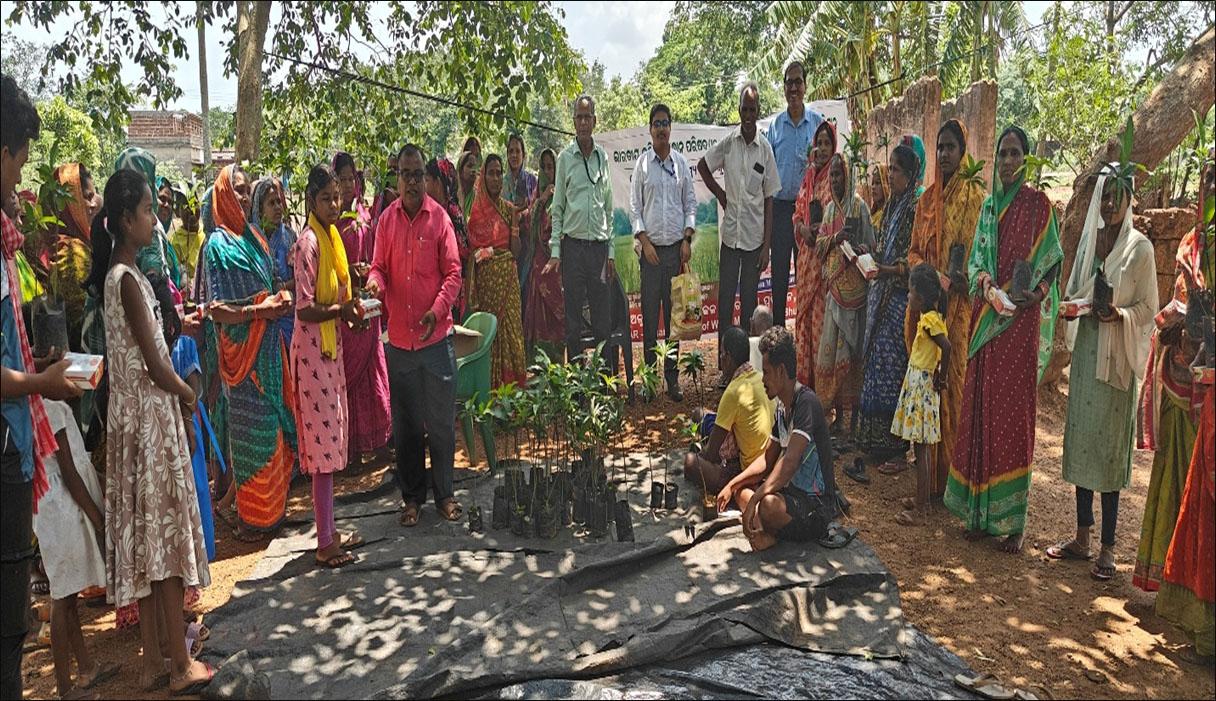
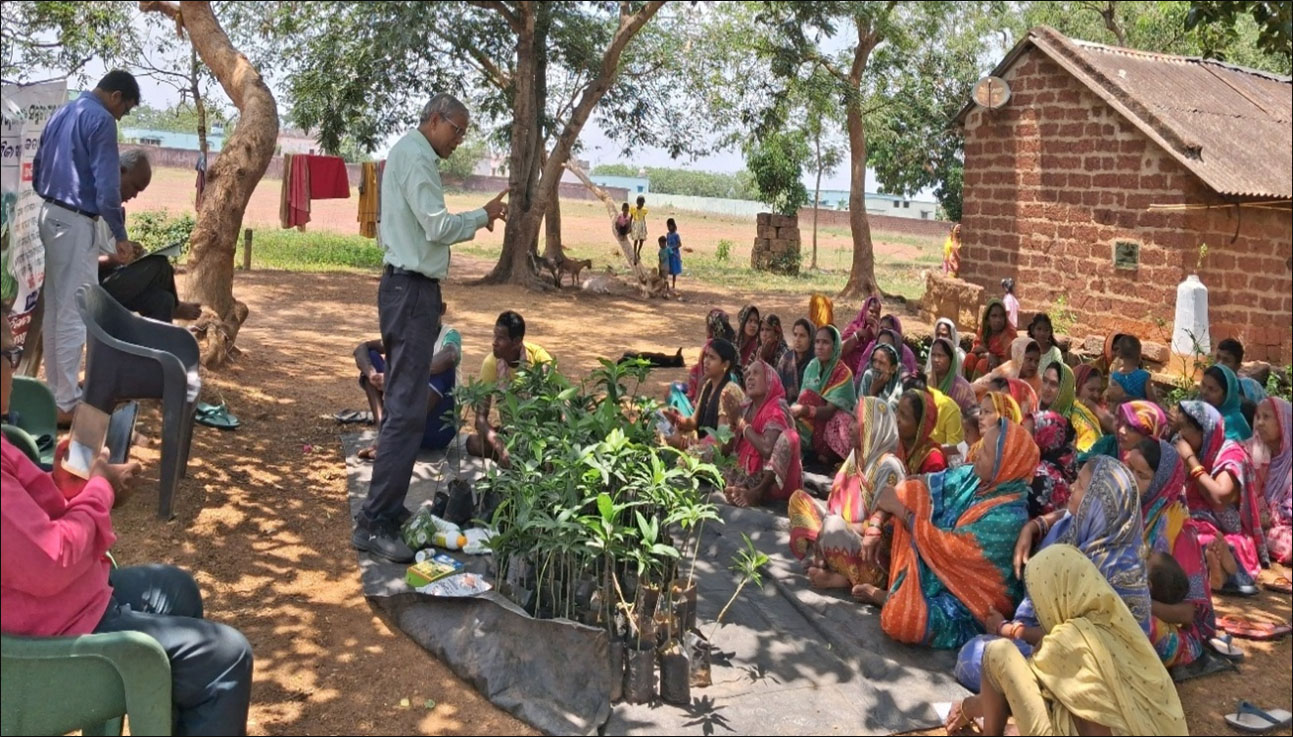
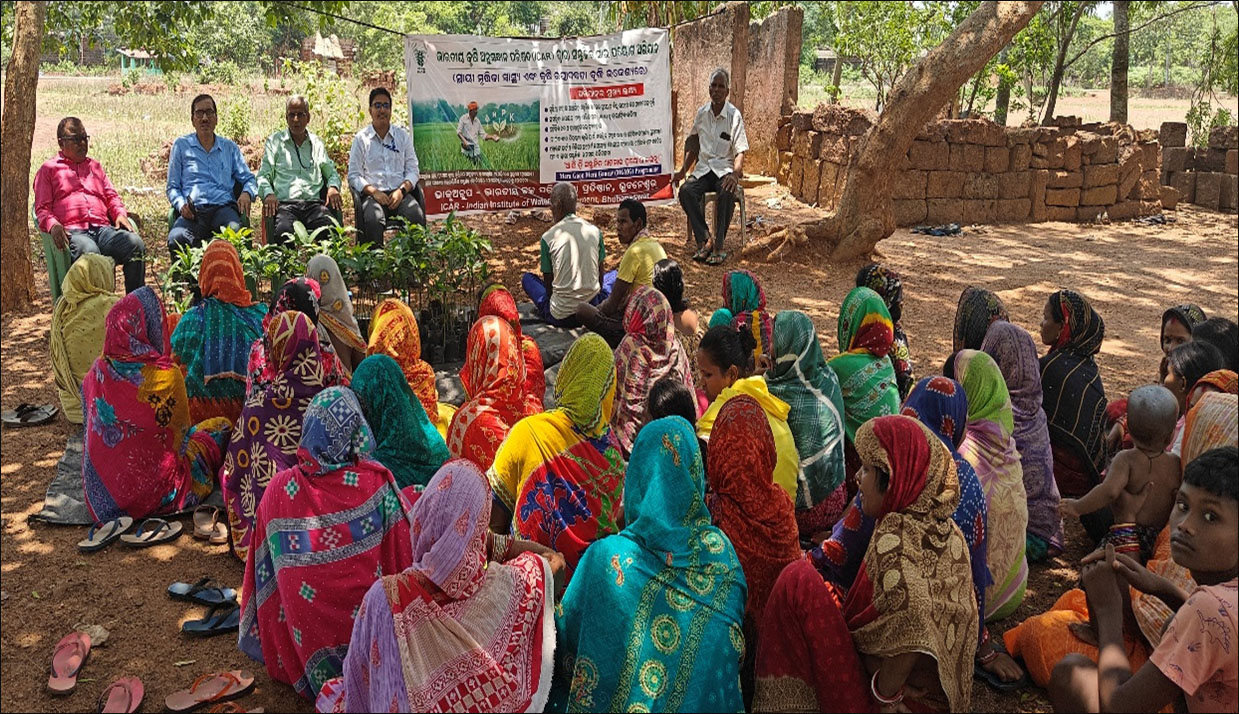
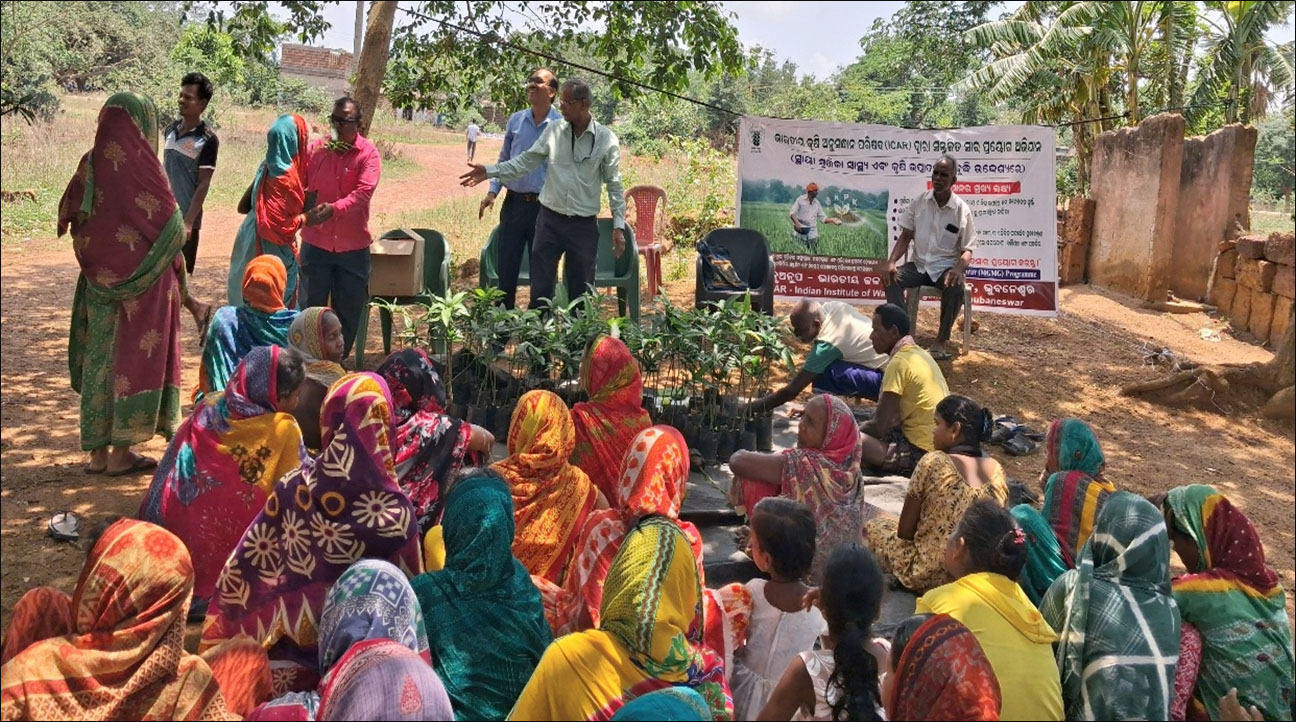
ICAR-Indian Institute of Water Management, Chandrasekharpur, Bhubaneswar organized an awareness-cum-training programme on ‘Balanced Use of Fertilizer in Agriculture’ on 4th May 2026 at Village Dholapatana, Block Kanas, District Puri, Odisha. Around hundred farmers, including 82 farm women, participated in the programme. Sri Radha Syam Biswal, progressive farmer and village leader of GP Gadasanput, chaired the awareness programme. Dr. S.K. Jena, Dr. B.S. Satapathy, Dr. R. Chakraborty, and Dr. A. Dalei participated as resource persons. Rice, greengram, blackgram, groundnut, and vegetables are the dominant crops in the village, mostly grown under rainfed conditions. Dr. S.K. Jena highlighted the importance of different soil and water conservation methods, such as planting on broad beds, mulching, and irrigation in furrows. He emphasized that the use of organic manures can increase resource-use efficiency and farm production under vegetable production systems. Dr. B.S. Satapathy, during the discussion, pointed out different sources of plant nutrients, such as green manuring, green leaf manuring, well-decomposed cow dung, FYM, enriched compost, vermicompost, biofertilizers, and alternative fertilizers for sustainable crop production in rice-based cropping systems based on soil test results. A demonstration of seed treatment using biofertilizers like Rhizobium in greengram and Azotobacter in paddy was conducted by Dr. R. Chakraborty. Different cultural practices like seed treatment, weed management, and integrated nutrient management in rice under both direct seeding and transplanting were explained to the farmers. Dr. Abinash Dalei explained the preparation of enriched compost and vermicompost from organic wastes available in the village and their recycling in agriculture to reduce dependence on chemical fertilizers. Sri Radha Syam Biswal highlighted the importance of SSP and gypsum in groundnut production. Farmers realized the importance of biofertilizers and inquired about their availability and proper use in vegetable gardens. Finally, about hundred grafted mango plants of the Arka Kiran variety were distributed to the farmers for plantation in the village.