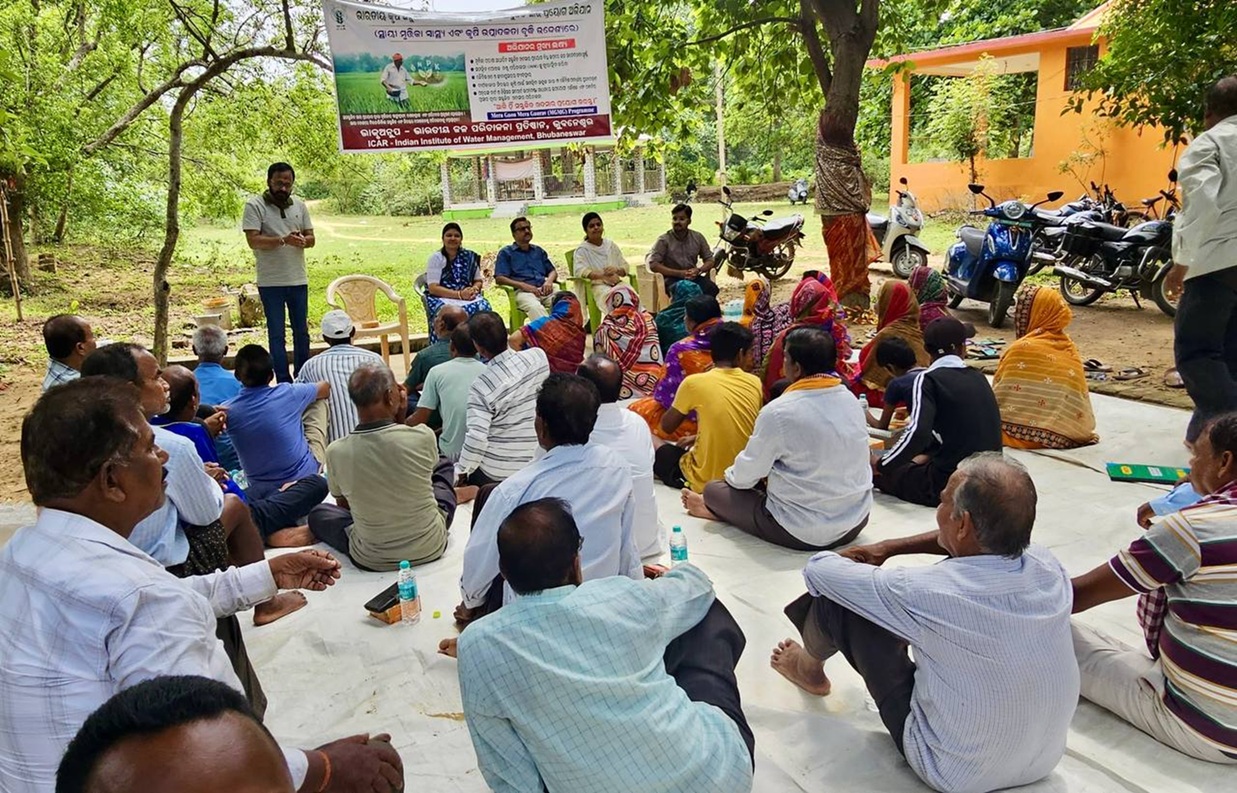
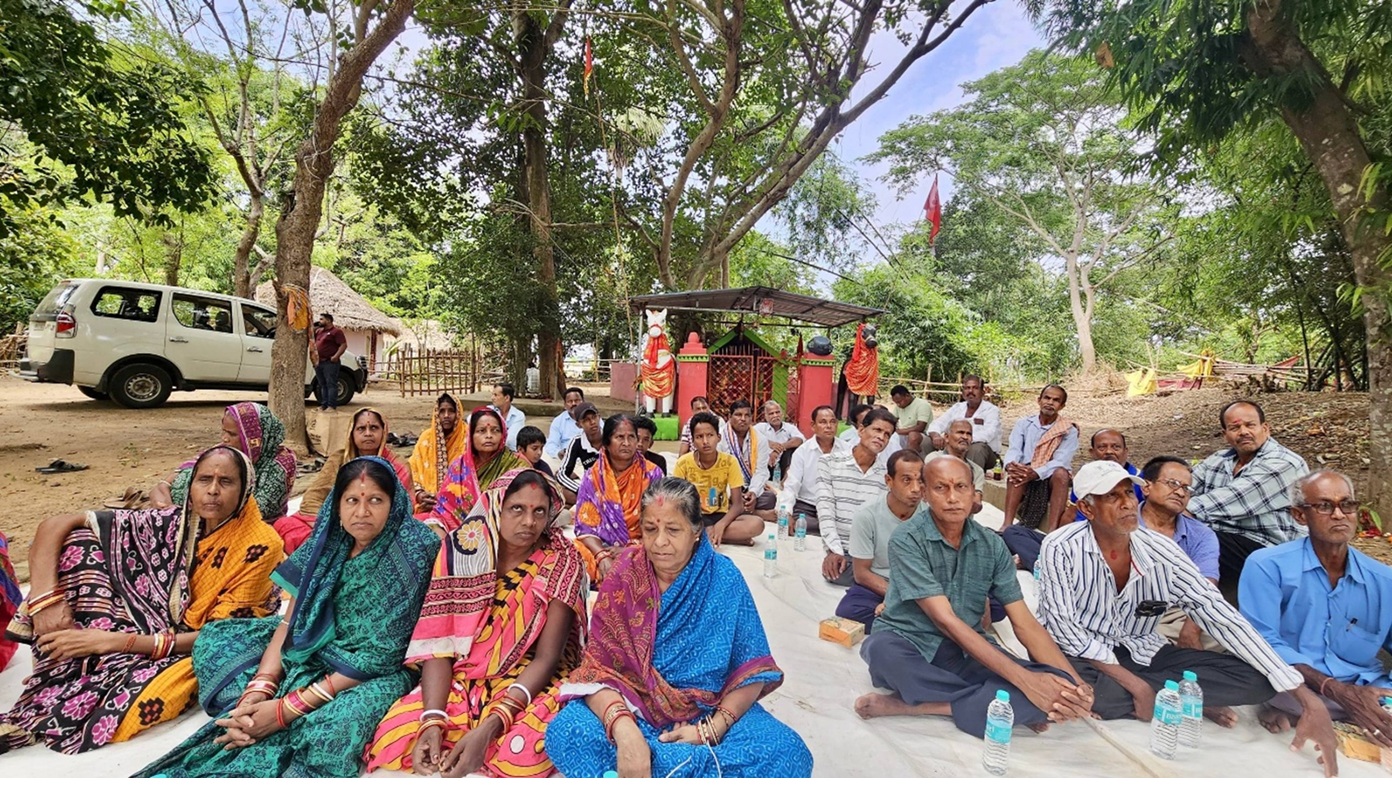
An awareness-cum-demonstration programme on Balanced Use of Fertilizers (BUF) was organized successfully on Wednesday, 06 May 2026 at Brahmanabati village in Kantapada Block of Cuttack district, Odisha under the Mission on Mera Gaon, Mera Gaurav (MGMG) programme of the Government of India. The farmer-scientist interaction programme was organized by the scientists of ICAR-Indian Institute of Water Management, Bhubaneswar, including Dr. R.K. Mohanty, Principal Scientist (Aquaculture), Dr. S. Mohanty, Principal Scientist (SWCE), Dr. Prativa Sahu, Scientist (Fruit Science), Dr. Ankhila R. Handral, Scientist (Agricultural Economics), and Dr. Mohammed Shafeeq P.M., Scientist (Agricultural Physics). A total of 56 farmers, including 10 female farmers, actively participated in the programme. The programme was conducted with the objective of promoting sustainable nutrient management practices among farming communities and creating awareness on maintaining soil productivity through scientific fertilizer use. During the programme, the scientists interacted extensively with farmers on the present challenges associated with declining soil fertility, rising cultivation costs, and imbalance in nutrient application. Farmers were informed that continuous use of nitrogenous fertilizers alone often leads to deterioration of soil structure, reduction in microbial activity, nutrient mining, and lower response of crops to fertilizers over time. Emphasis was therefore laid on restoring soil health through integrated approaches involving organic amendments, bio-inputs, and balanced fertilization practices. The experts highlighted the importance of conserving beneficial soil microorganisms and maintaining adequate organic matter in agricultural fields for improving nutrient cycling and moisture retention. Farmers were advised to recycle farm wastes, prepare compost from locally available biomass, and adopt residue incorporation practices. Discussions were also held on improving fertilizer efficiency through split application, placement methods, moisture management, and synchronized nutrient supply according to crop growth stages. Scientists further explained the advantages of including pulse and leguminous crops in crop rotations for natural nitrogen enrichment and improved soil fertility. Awareness was also created regarding the role of bio-fertilizers and microbial consortia in enhancing nutrient availability, reducing dependency on chemical fertilizers, and improving resilience of crops under stress conditions. Farmers were encouraged to adopt low-cost and location-specific nutrient management strategies suitable for local farming conditions. Practical demonstrations were conducted on the use and application methods of Rhizobium, Azotobacter, Trichoderma, Phosphorus Solubilizing Bacteria (PSB), Potassium Solubilizing Bacteria (KSB), vermicompost, Farmyard Manure (FYM), nano-urea, and green manuring with Sesbania (Dhaincha). The participants were also shown methods for multiplication of beneficial microbial cultures using cow dung-based organic media under field conditions to improve microbial population and nutrient availability in soil. The programme concluded with an interactive discussion session, where farmers expressed keen interest in adopting balanced and sustainable nutrient management practices for improving soil health and crop productivity.