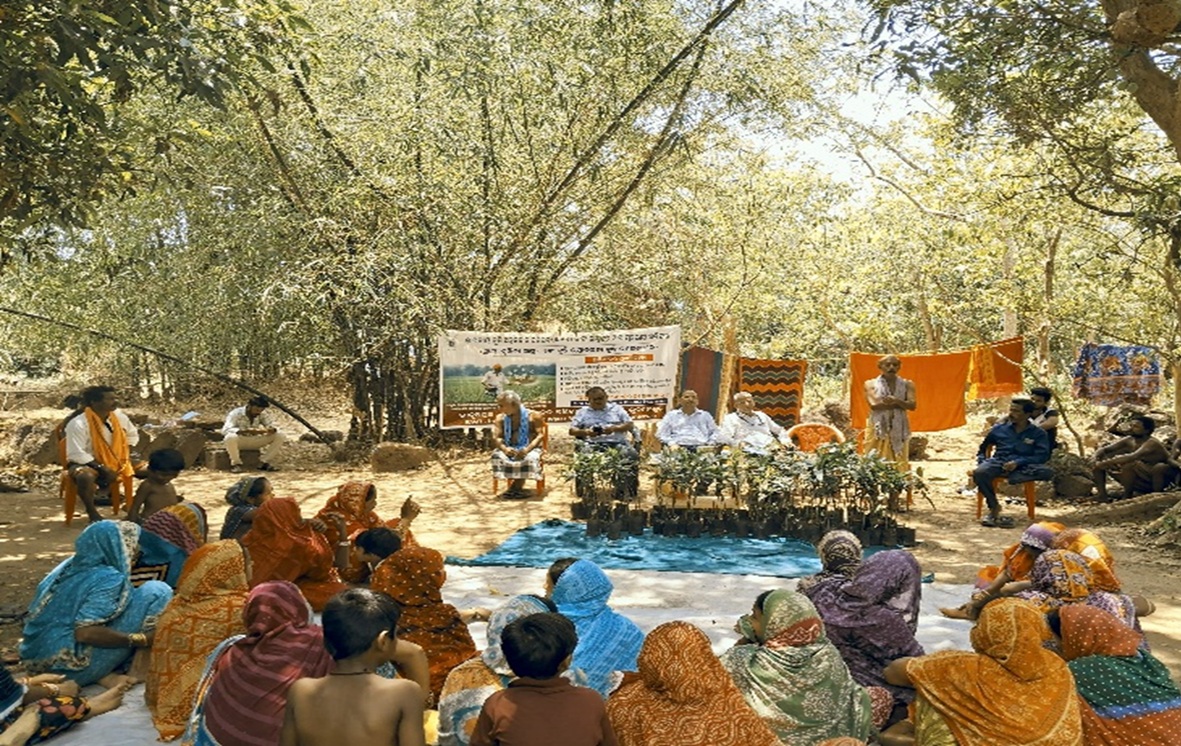
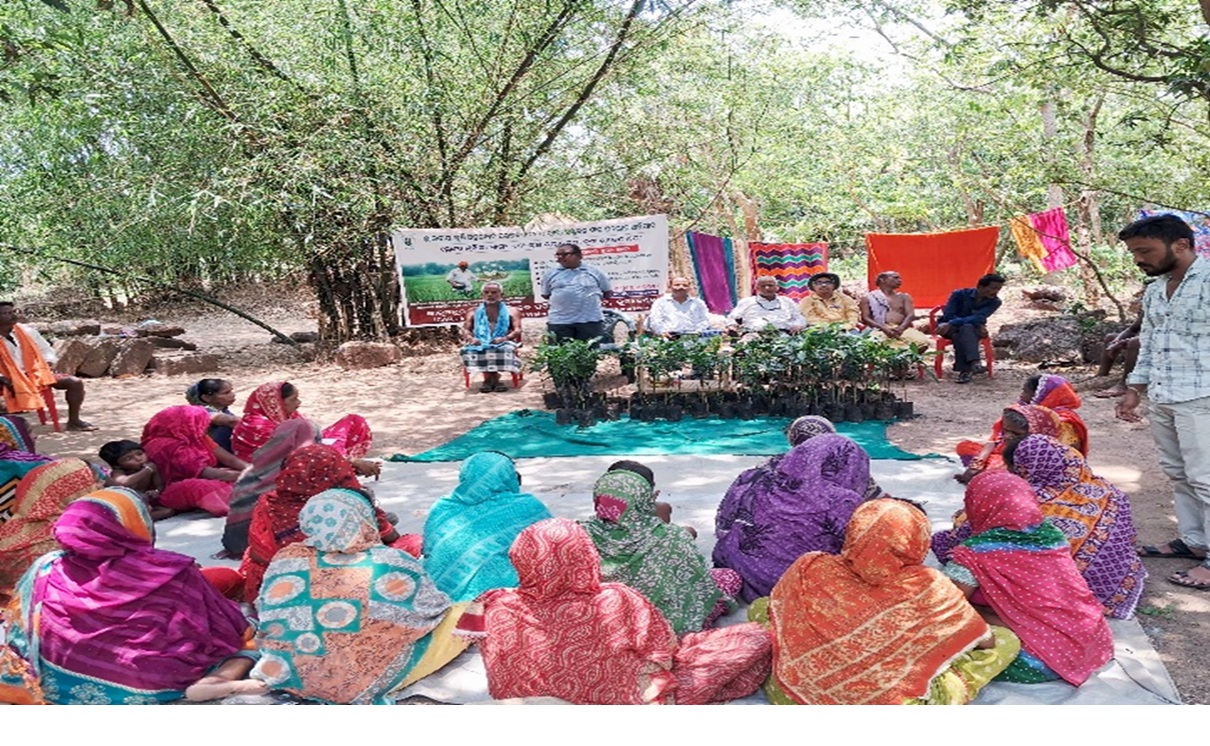
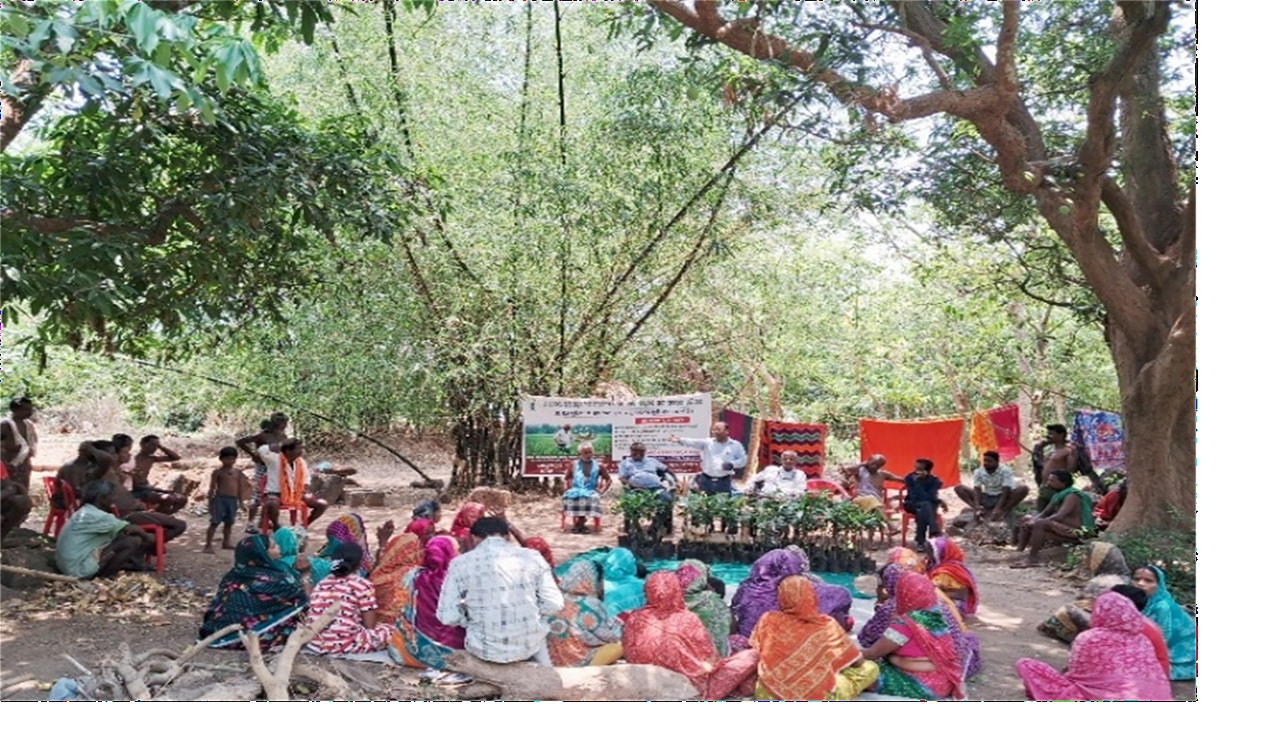
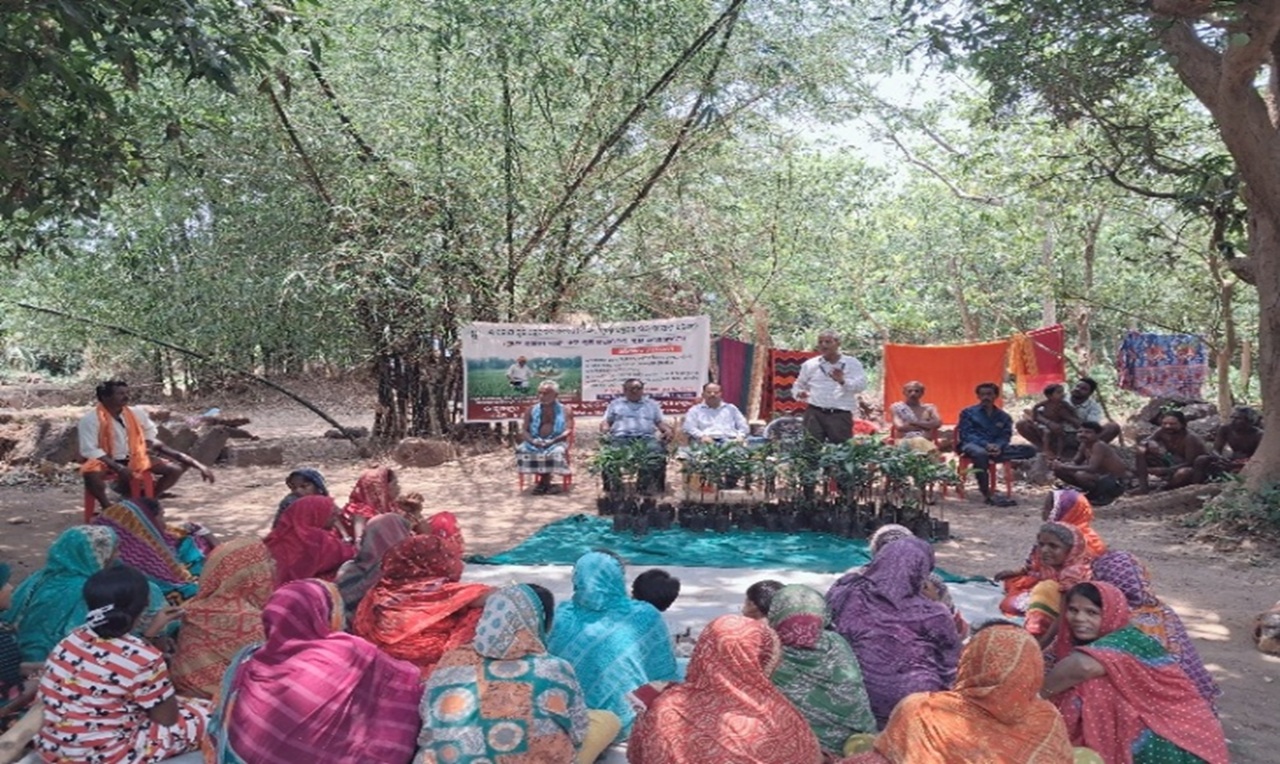
As part of the MGMG initiative, ICAR-Indian Institute of Water Management, Bhubaneswar conducted an awareness-cum-demonstration programme on “Balanced Use of Fertilizers in Agriculture” on 15th May 2026 at Village Helmet Bauri Side, Dholapatana, Block Kanas, District Puri, Odisha. The programme witnessed active participation of 62 farmers, including 43 farm women. The programme was chaired by Sri Radha Syam Biswal, progressive farmer, and Mr. Kripa Sindhu Biswal, Retired Teacher. Dr. A.K. Nayak, Dr. B.S. Satapathy, and Dr. R. Chakraborty attended the programme as resource persons. Dr. A.K. Nayak emphasized the need for scientific water management and climate-resilient agricultural practices in rainfed ecosystems. He explained various in-situ moisture conservation techniques such as mulching, ridge and furrow planting, and efficient irrigation methods for improving water productivity and crop performance. Dr. B.S. Satapathy elaborated on the importance of balanced nutrient management for sustaining soil fertility and crop productivity. He discussed the role of organic and inorganic nutrient sources, including FYM, compost, green manuring, biofertilizers. He also explained the preparation and use of enriched compost and vermicompost utilizing locally available organic residues for sustainable agriculture. Dr. R. Chakraborty highlighted soil test-based fertilizer application for improving nutrient-use efficiency in rice-based cropping systems and carried out a practical demonstration on seed treatment with biofertilizers using Rhizobium for pulse crops and Azotobacter for paddy cultivation. Sri Radha Syam Biswal shared his practical experiences on rice and vegetable cultivation and highlighted the importance of using organic inputs for maintaining soil fertility. Mr. K.S. Biswal interacted with the farmers on natural farming practices and encouraged the use of locally available inputs for sustainable crop production. Farmers actively participated in the discussion and sought guidance regarding the application methods and availability of biofertilizers. At the end of the programme, around one hundred grafted mango saplings of Dasheri and Amrapali varieties were distributed among the farmers for plantation in the village.