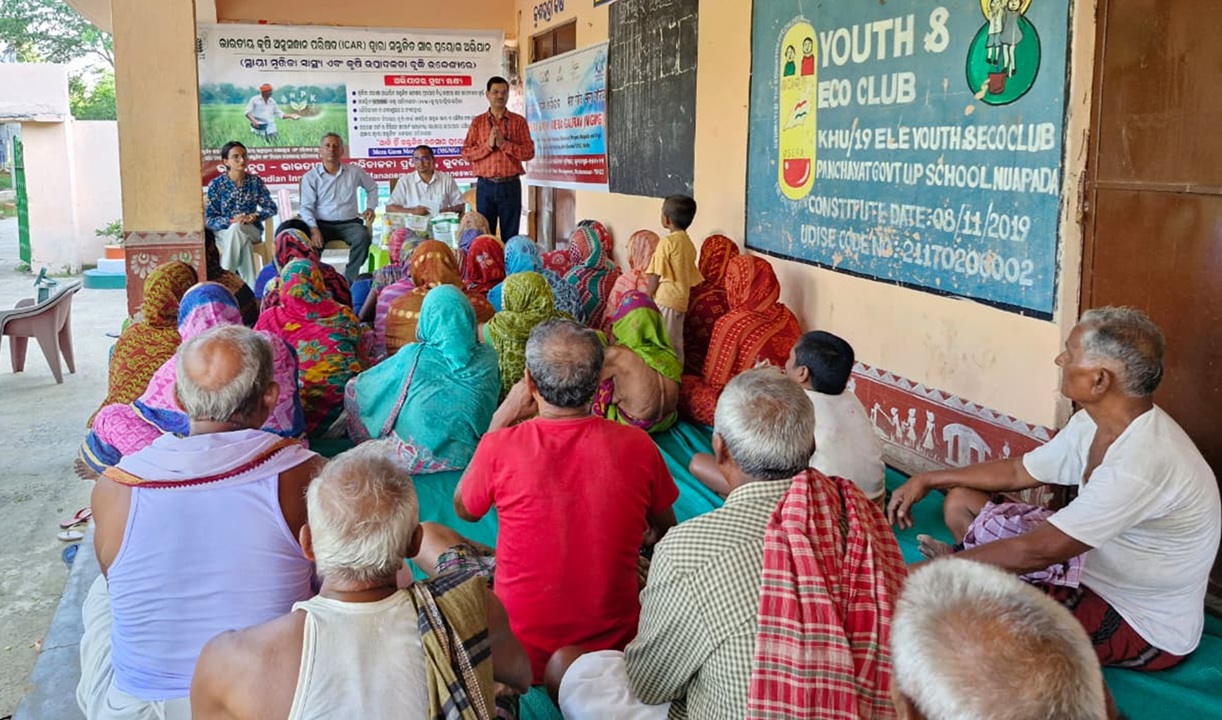
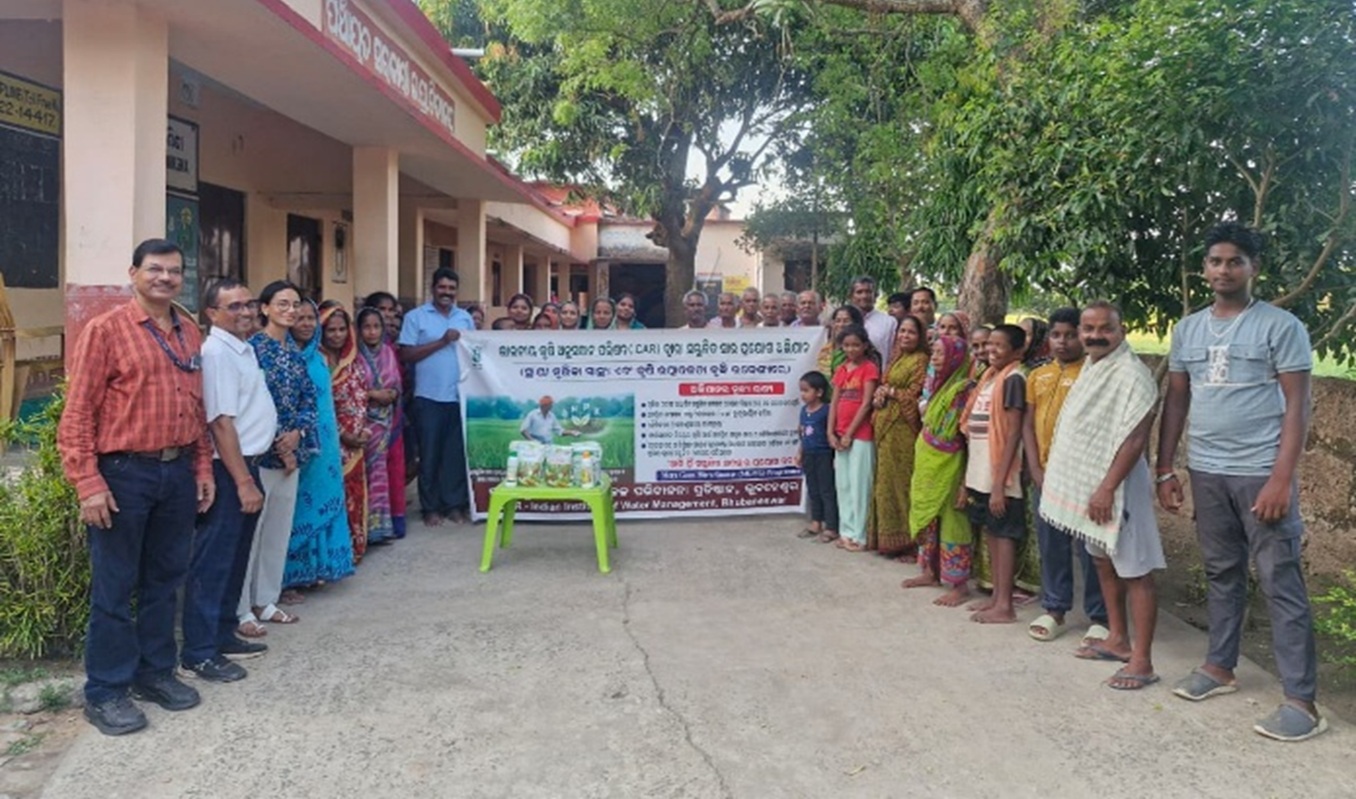
An awareness-cum-demonstration programme on Balanced Use of Fertilizers (BUF) was successfully organized on 08th May, 2026 in Nuapada village under Pampalo GP of Balipatna Block, Khordha, Odisha under the Mera Gaon, Mera Gaurav (MGMG) programme of the Government of India. The programme witnessed active participation from a total of 50 farmers including 38 women. The programme focused on promoting the balanced, judicious, and need-based application of synthetic (mineral/inorganic) fertilizers, with particular emphasis on reducing the excessive use of urea, which currently dominates fertilizer consumption. The participating scientists emphasized the importance of substituting at least 25% of mineral fertilizers with organic manures to improve soil health and long-term sustainability. Farmers were sensitized on the importance of soil testing for soil health management, adoption of Integrated Nutrient Management (INM), appropriate cropping and farming systems, crop diversification, and efficient Agricultural Water Management (AWM) to enhance Nutrient Use Efficiency (NUE). They were also made aware of waste-to-wealth approaches, as well as the serious health and environmental hazards associated with excessive chemical fertilizer use, and the need to scale up safe and sustainable alternatives without compromising crop productivity. During the programme, demonstrations were conducted on the methods and timing of application of various bio-fertilizers and organic inputs, including Rhizobium, Azotobacter, Phosphorus Solubilizing Bacteria (PSB), Potassium Solubilizing Bacteria (KSB), vermicompost, Farmyard Manure (FYM), green manuring with Sesbania (Dhaincha), nitrogen-fixing leguminous crops, Leaf Colour Chart (LCC)-based nitrogen application, and nano-urea. A special emphasis was given to the effective use of bio-fertilizers, wherein it was explained how liquid or carrier-based bio-fertilizers can be mixed with cow dung and kept for 12–15 days under proper conditions. This process helps in increasing the population of beneficial microorganisms, thereby enhancing nutrient availability and improving crop productivity. The campaign-cum farmer–scientist interaction programme was organized and coordinated by Dr. S.K. Mishra, Dr. P. Panigrahi, Dr. Ashis Maity, and Dr. Mamta Bisht.