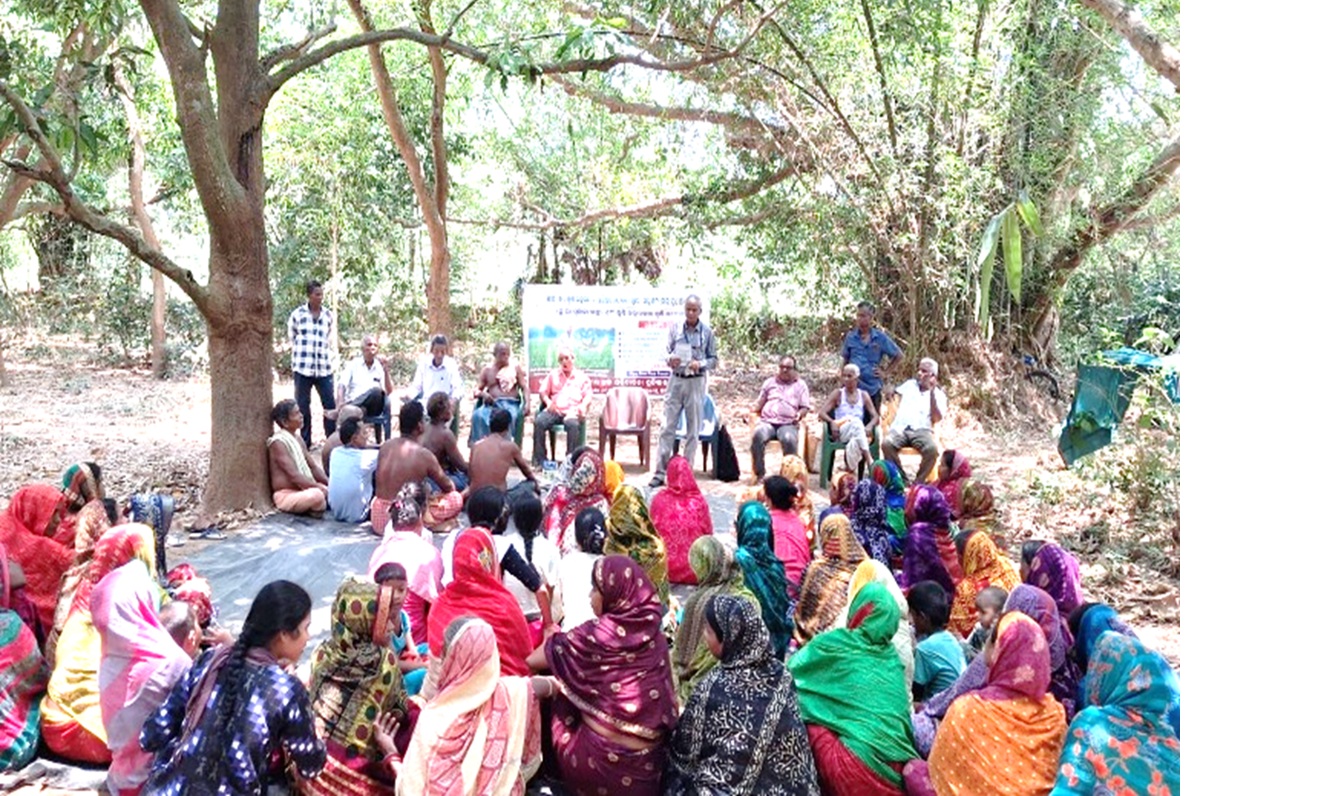
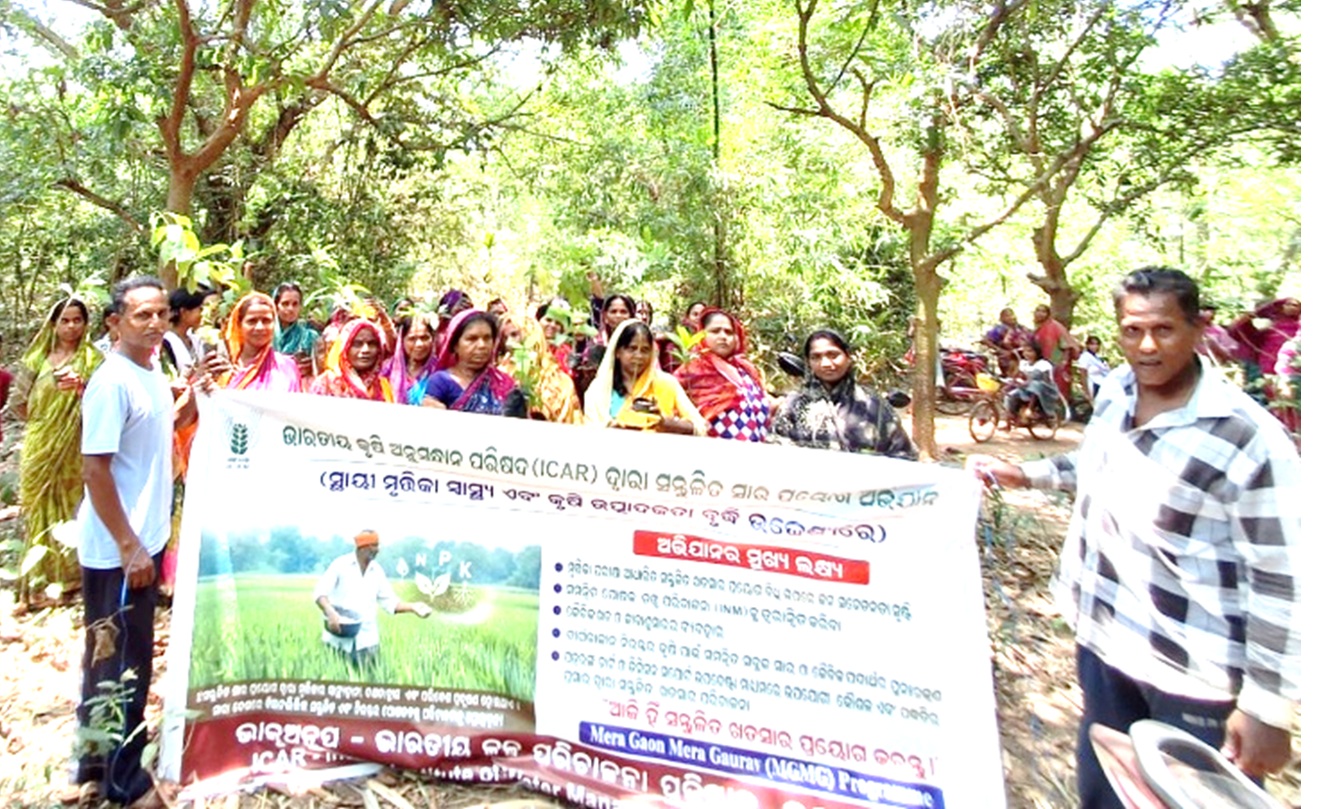
As part of MGMG initiatives, ICAR-Indian Institute of Water Management, Bhubaneswar organized an awareness-cum-demonstration programme on “Balanced Use of Fertilizers in Agriculture” on 2nd June 2026 at village: Gadasanaput, Hamlete: Parida Sahee, Block: Kanas, District: Puri, Odisha. The programme recorded enthusiastic participation from 36 farmers, comprising 25 women farmers and 11 men farmers along with members of the village Cooperative society. The programme was organized by Dr. B.S. Satapathy, Senior Scientist and Dr. Ranabir Chakraborty, Scientist. Sri Radha Shyam Biswal was acted as one of the resource persons in the programme. During the interaction, Dr. B. S. Satapathy highlighted the importance of scientific water management and climate-resilient agricultural practices for rainfed ecosystems and emphasized the significance of balanced nutrient management for sustaining soil health and ensuring long-term crop productivity. He elaborated on the integrated use of organic and inorganic nutrient sources such as farmyard manure (FYM), compost, green manures, biofertilizers and fertilizers in crop production. Dr. R. Chakraborty stressed the importance of soil test-based fertilizer application for improving nutrient-use efficiency in rice-based cropping systems. Progressive farmer Sri Radha Shyam Biswal shared his field experiences related to rice, groundnut and vegetable cultivation. The villagers highlighted the causes of degradation of soil, water and crop productivity in the villages. The farmers actively participated in the interactive discussions and sought guidance regarding the application procedures, benefits, and availability of biofertilizers, vermicompost, compost and seed treatment bio stimulants. During the discussion adoption of natural farming in vegetable cultivation in village homestead gardens was emerged as a viable option for safe production vegetables at low cost. To give importance to the kitchen gardens, 60 grafted mango saplings of Amrapali varieties were distributed among the participating farmers for plantation in the village.