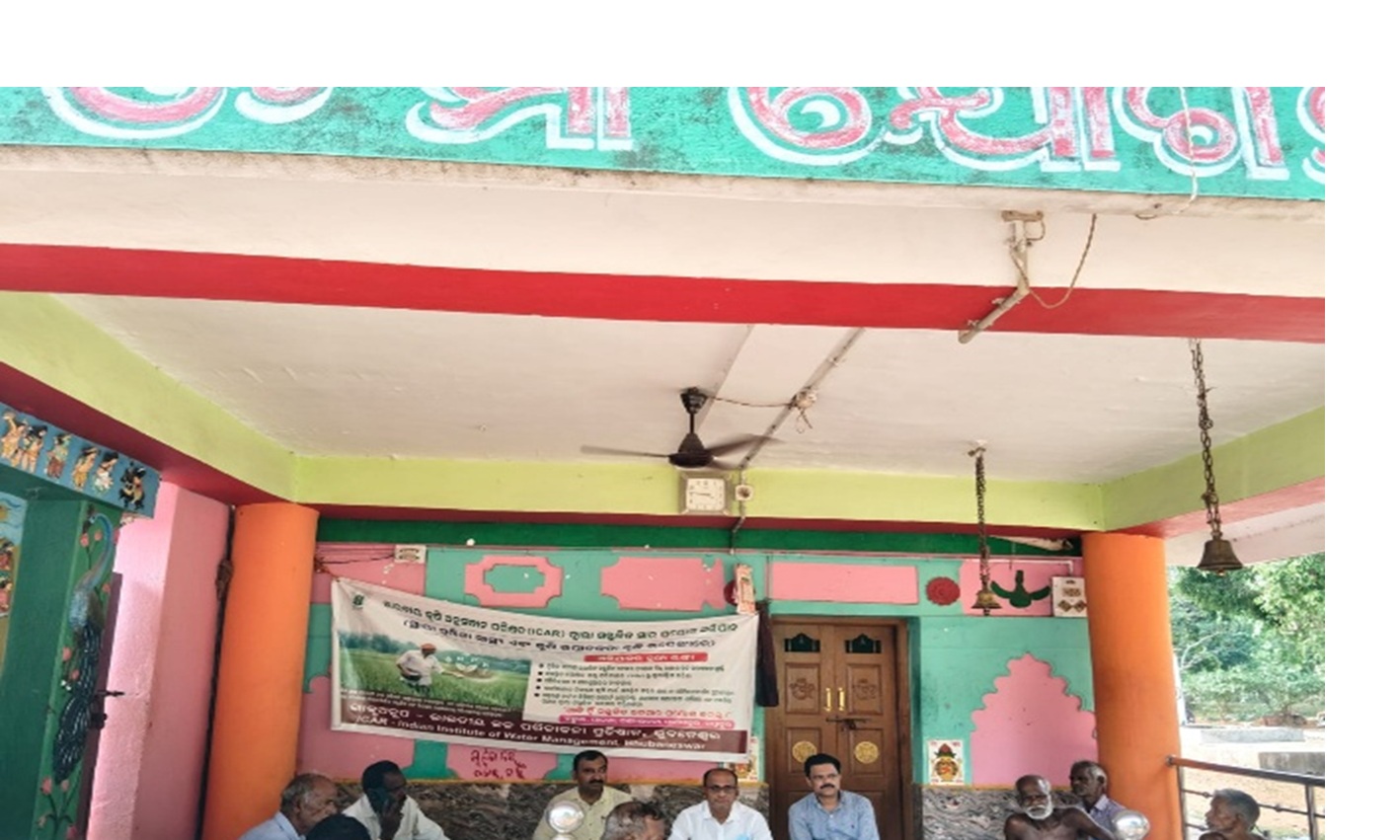
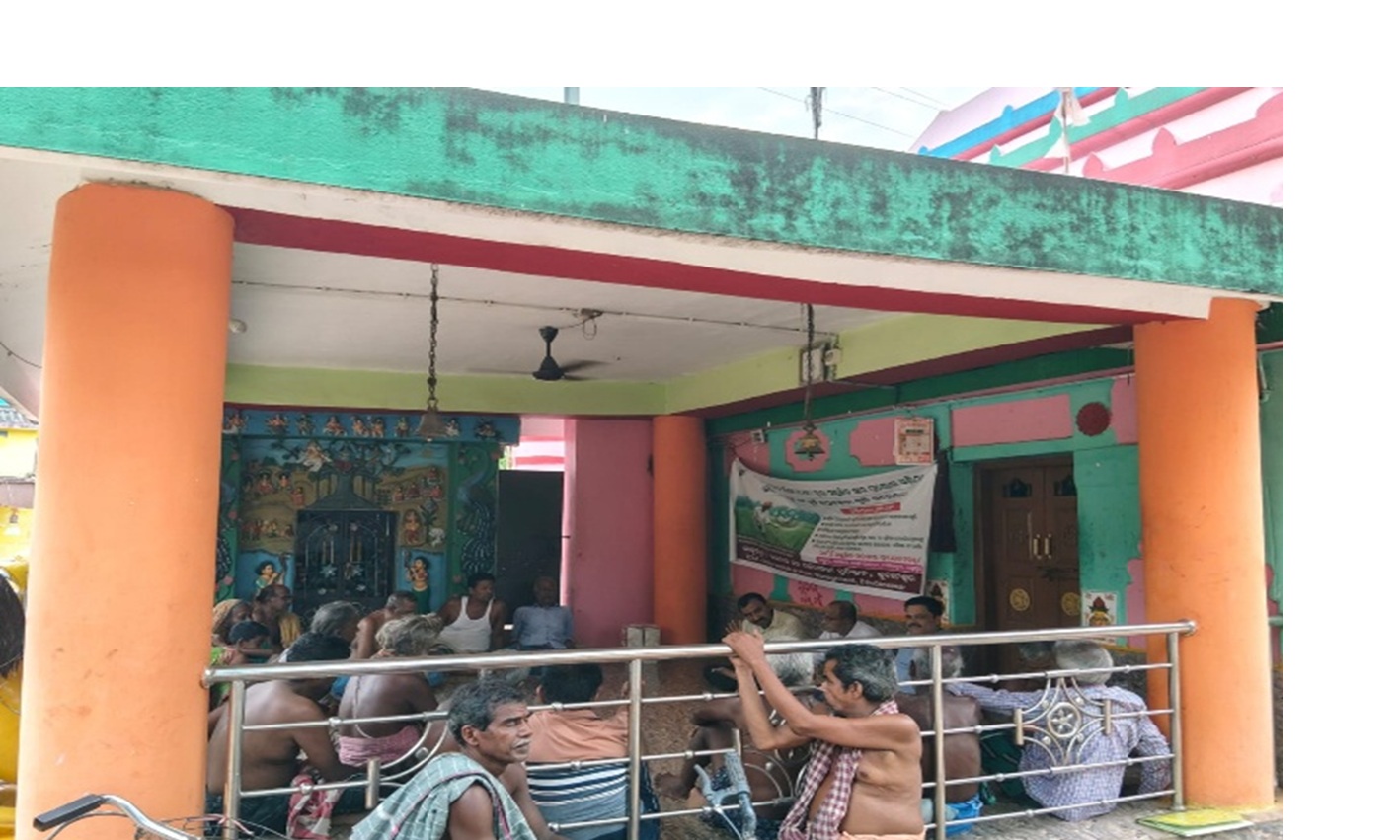
A training and awareness programme on “Balanced Use of Fertilizers and Science-Based Nutrient Management” was organized by the scientists of ICAR-Indian Institute of Water Management on 26th May 2026 at Angarpada village under Jatni Block of Odisha. The programme was conducted under MGMG Programme Team-2 and was presided by Drs. R.K. Panda, P.K. Panda, S. Patra and Er. A. M. Jadhav. A total of 35 farmers, including 25 male and 10 female participants actively participated in the programme. The programme was organized in view of the possible fertilizer shortage and supply-related uncertainties arising due to the prevailing global war situation. The primary objective of the campaign was to create awareness among farmers regarding balanced fertilizer application, scientific nutrient management, and sustainable agricultural practices for maintaining long-term soil fertility and crop productivity. During the programme, the scientists emphasized the importance of balanced and need-based application of fertilizers according to crop requirements and soil health conditions. Farmers were informed about the harmful effects of indiscriminate and excessive use of chemical fertilizers, particularly nitrogenous fertilizers, which may lead to soil degradation, nutrient imbalance, reduction in fertilizer use efficiency and decline in crop productivity. The experts also highlighted the importance of integrated nutrient management practices involving the combined use of chemical fertilizers, organic manures, crop residues, and bio-inputs for improving soil health and sustaining agricultural productivity. The participating farmers were further encouraged to adopt scientific soil fertility management practices and judicious use of available fertilizer resources during the present supply uncertainty scenario. The programme concluded with an interactive discussion session, where farmers shared their experiences and concerns related to soil fertility, fertilizer management, and crop nutrition. Overall, the training and awareness programme proved to be highly informative and beneficial in promoting balanced fertilizer use, sustainable nutrient management, and environmentally sound agricultural practices among the farming community of Angarpada Village.