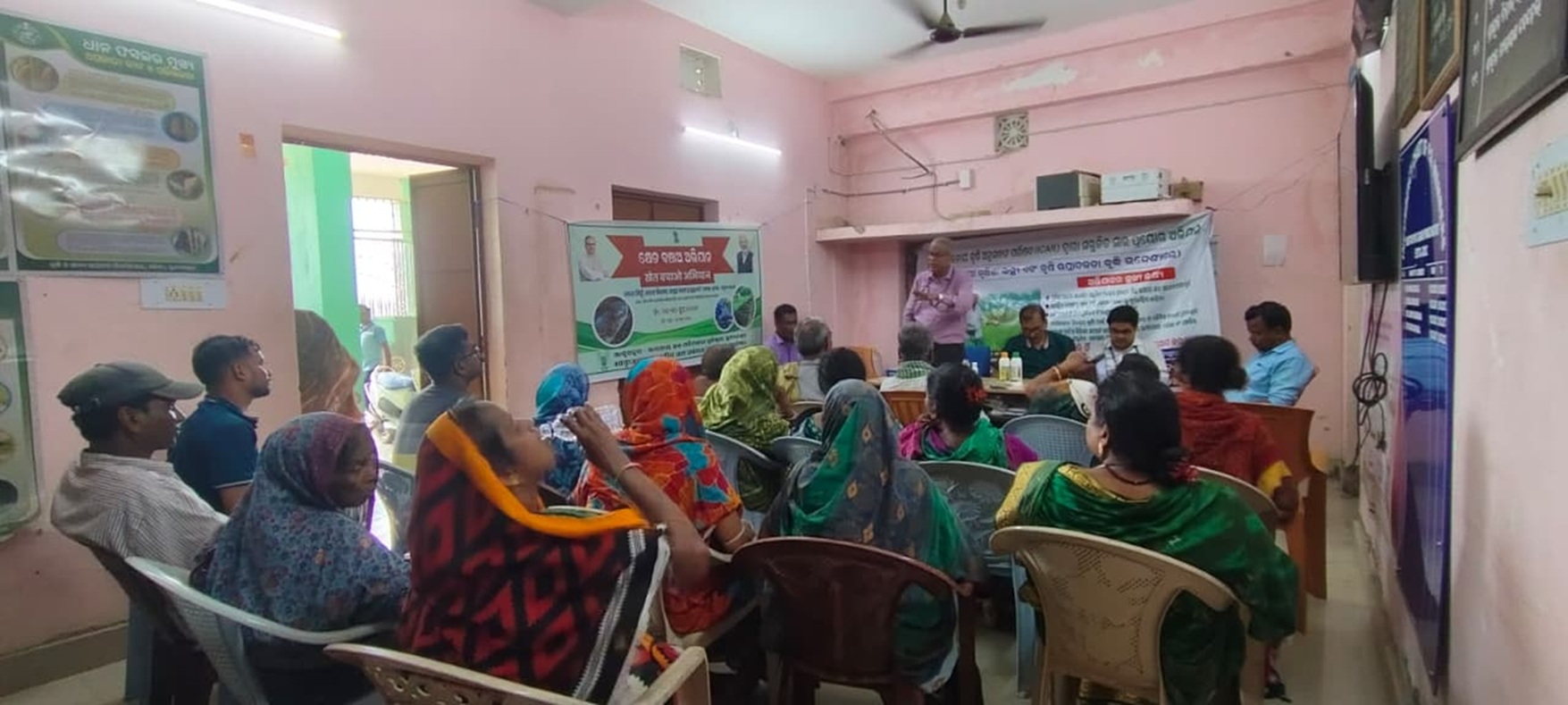
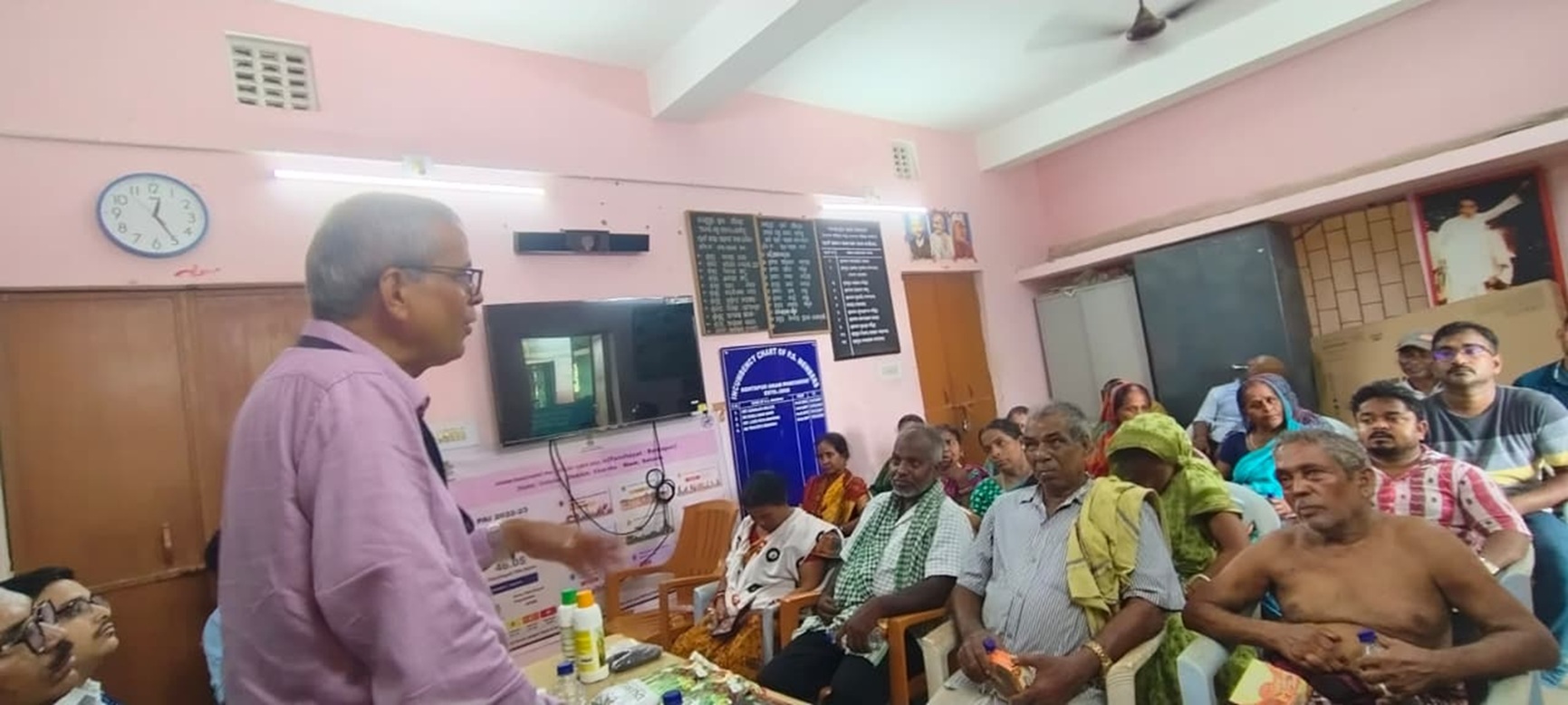
ICAR-Indian Institute of Water Management, Chandrasekharpur, Bhubaneswar organized an awareness-cum-training programme under the “Khet Bachao Abhiyan” on 9th June 2026 at the Bentapur Gram Panchayat Meeting Hall, Block: Balianta, District: Khordha, Odisha. A total of 60 farmers participated in the programme. Representatives of the Gram Panchayat and members of local Self-Help Groups (SHGs) also attended the programme. Dr. S.K. Jena, Dr. B. S. Satapathy, and Dr. Ranabir Chakraborty participated as resource persons. Bentapur village has a diversified farming system comprising agriculture, horticulture, and dairy enterprises. The village SHGs are actively engaged in vermicompost production and marketing, contributing to sustainable nutrient management in the locality. Considering the significant presence of dairy-based farming systems in the village, Dr. B. S. Satapathy elaborated on the multifaceted benefits of cow dung and cow urine as valuable resources for improving soil health, enhancing nutrient recycling, and supporting sustainable agriculture. He encouraged farmers to adopt natural farming practices and utilize indigenous inputs such as Jeevamrit and Ghanajeevamrit to improve soil biological activity and reduce dependence on external inputs. He also highlighted the use of locally available bio-resources such as neem and karanj leaves for the preparation of botanical formulations for eco-friendly pest and disease management. Dr. S.K. Jena sensitized the participants on the importance of balanced fertilizer use and Integrated Nutrient Management (INM) through the judicious integration of chemical fertilizers, organic manures, green manures, and biofertilizers for improving soil fertility, nutrient-use efficiency, and crop productivity. He also emphasized the role of sustainable farming practices in reducing cultivation costs and maintaining long-term soil health. Dr. Ranabir Chakraborty demonstrated seed treatment and biofertilizer application techniques and explained their role in enhancing nutrient-use efficiency, improving crop productivity, and sustaining soil health. He also highlighted the importance of soil-test-based nutrient management and the effective utilization of Soil Health Cards for scientific and balanced fertilizer application. The farmers actively interacted with the scientists and discussed issues related to nutrient management, soil health, and crop production. Awareness regarding production of vegetable seedlings in plastic trays and raised beds, mushroom production, processing of surplus mago as dry papada, pickles and other value added products, value addition of milk as curd, cheese, paneer and ghee as secondary agriculture to enhance income of women famers of the locality. Package and practices related to vegetable producrion are discussed in the meeting. The programme concluded with an appeal to adopt environmentally sustainable and resource-efficient farming practices for achieving healthy soils, healthy crops, and enhanced farm profitability under the Khet Bachao Abhiyan.