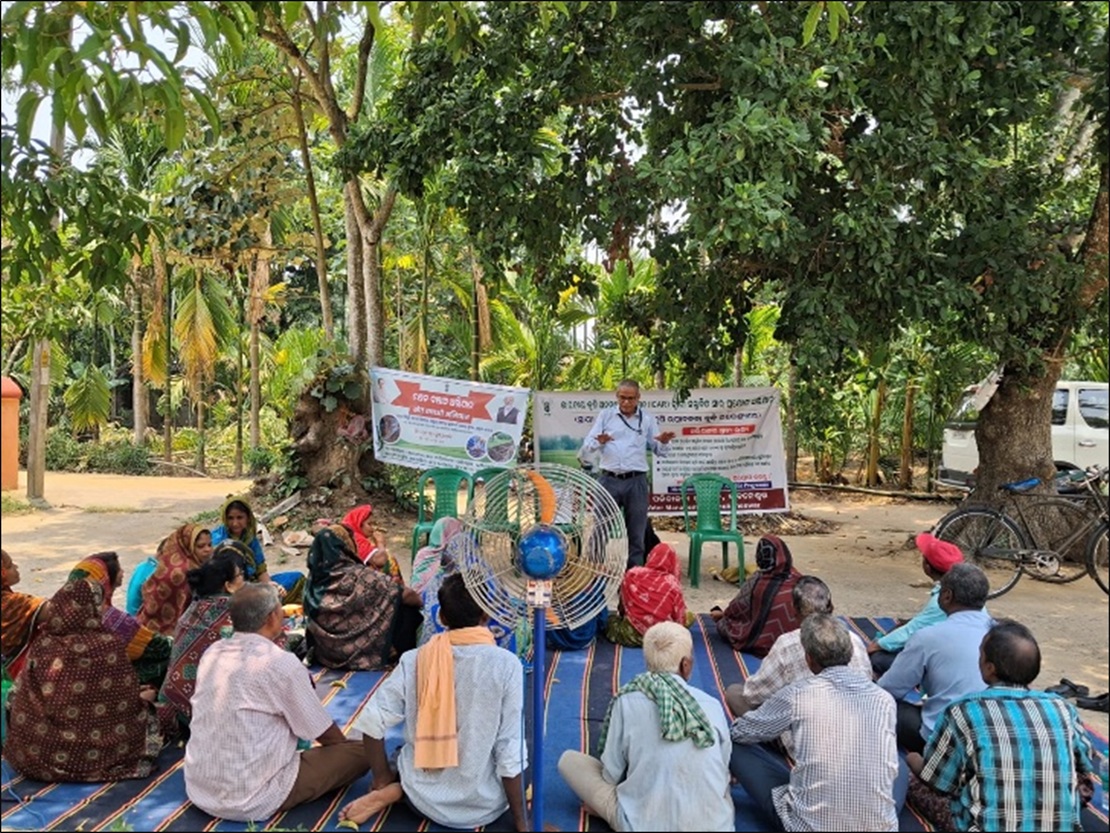
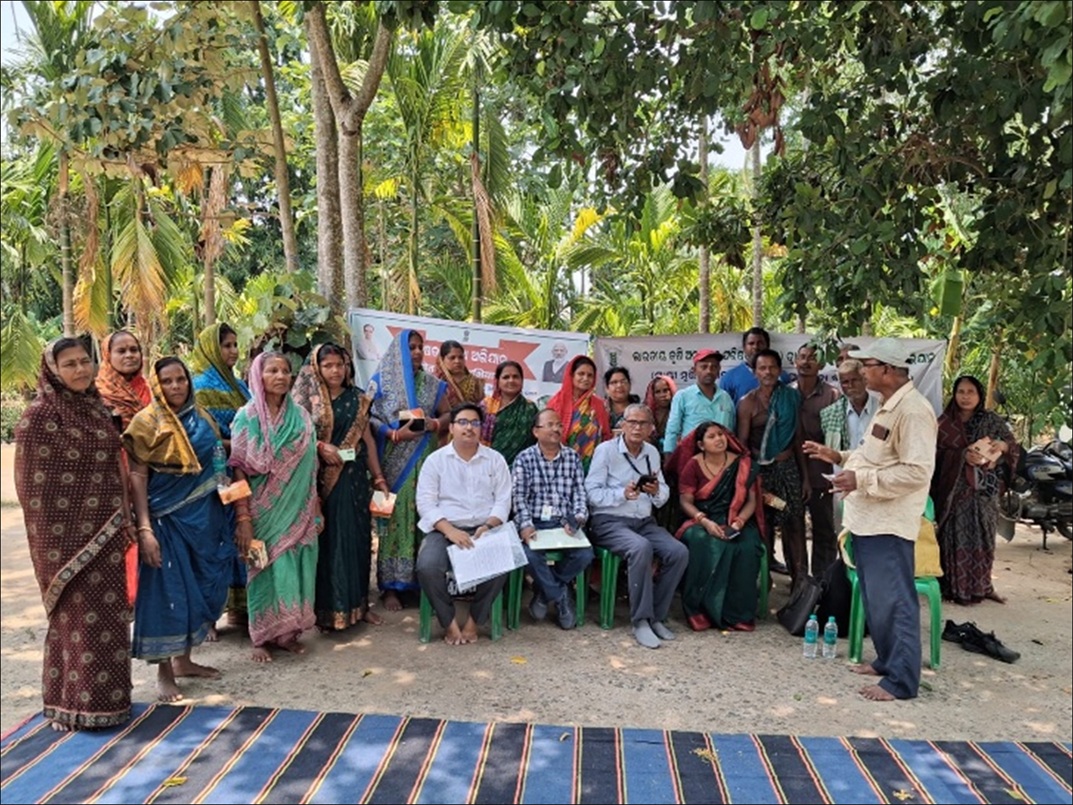
ICAR–Indian Institute of Water Management, Chandrasekharpur, Bhubaneswar organized an awareness-cum-training programme under the “Khet Bachao Abhiyan” on 10th June 2026 at Naranpur village, Jagatsinghpur Block, Jagatsinghpur District, Odisha. A total of 55 farmers, comprising 28 women and 27 men, participated in the programme. The meeting was presided over by the village Sarpanch, Mrs. Anjali Samal. The technical sessions were conducted by Dr. A.K. Nayak, Dr. B.S. Satapathy and Dr. Ranabir Chakraborty. The programme aimed to create awareness among farmers on sustainable agricultural practices, efficient resource management, and scientific nutrient management for improving farm productivity and profitability. Dr. A.K. Nayak elaborated on the objectives of the Khet Bachao Abhiyan and highlighted the need for conserving natural resources in agriculture. He also introduced farmers to digital tools and mobile applications such as Plantix and Bharat Vistaar, explaining how these platforms can assist farmers in crop diagnosis, pest and disease identification, weather-based advisories, and access to scientific agricultural information. Dr. B.S. Satapathy emphasized the importance of maintaining soil fertility through balanced and integrated nutrient management. He discussed the role of organic manures, crop residues, green manuring, and biofertilizers in sustaining soil health and improving nutrient-use efficiency. He further encouraged farmers to adopt eco-friendly farming practices and utilize locally available resources for reducing production costs while maintaining crop productivity. Special emphasis was given to the preparation and use of indigenous organic formulations and botanical extracts for environmentally safe crop protection. Dr. Ranabir Chakraborty highlighted the significance of soil-test-based fertilizer application and urged farmers to make effective use of Soil Health Cards for informed nutrient management decisions. He also discussed the importance of secondary and micronutrients for achieving balanced crop nutrition and higher fertilizer-use efficiency. The programme witnessed active participation from the farming community, with farmers raising queries related to soil fertility management, fertilizer application, pest management, and crop production constraints. The scientists addressed these issues through interactive discussions and practical recommendations. In her concluding remarks, Sarpanch Mrs. Anjali Samal appealed to the farmers to adopt the scientific recommendations shared during the programme and disseminate the knowledge among fellow farmers for the benefit of the entire village. She expressed her appreciation to the scientists and thanked the resource persons for conducting the informative and farmer-oriented training programme.