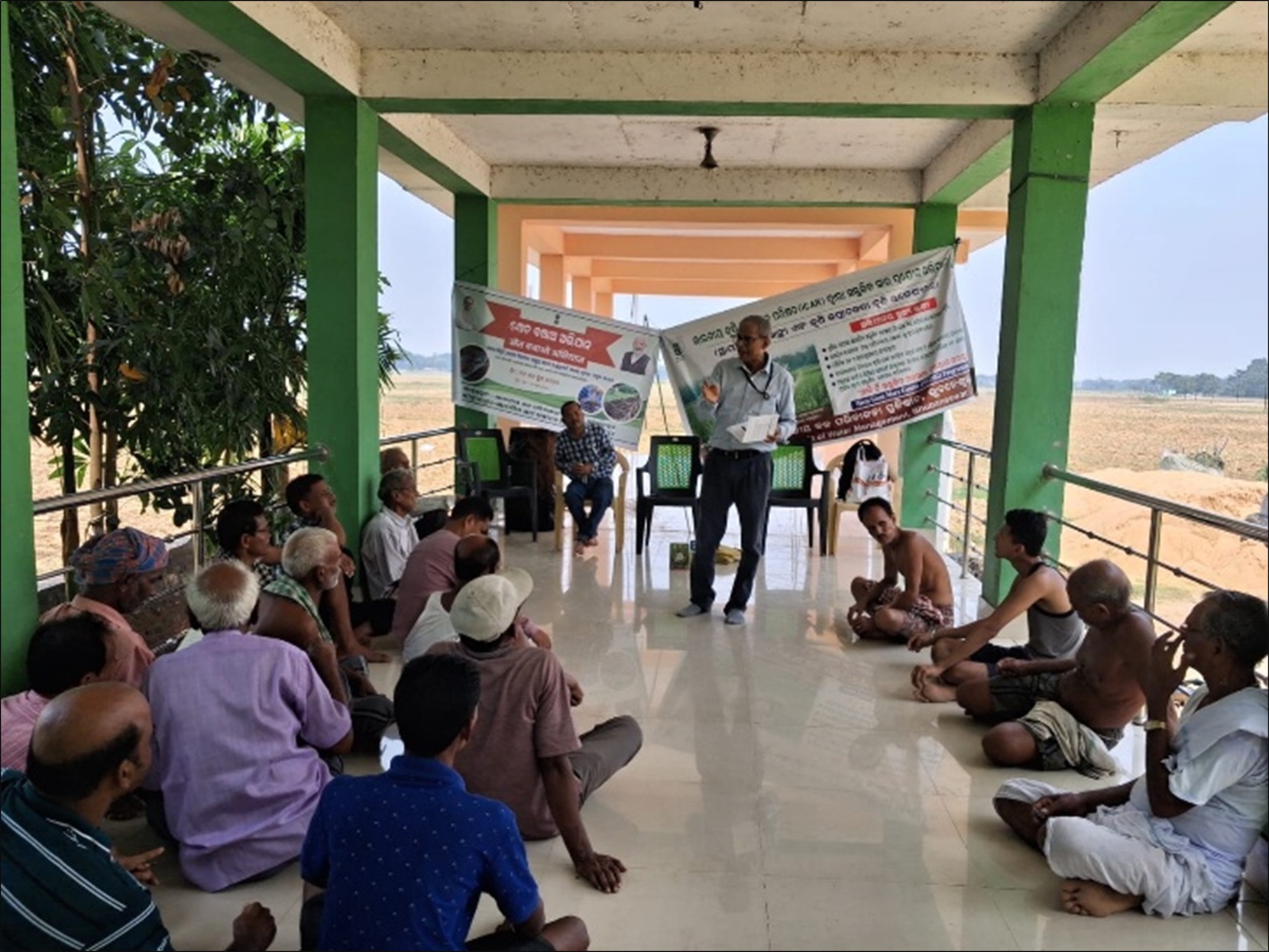
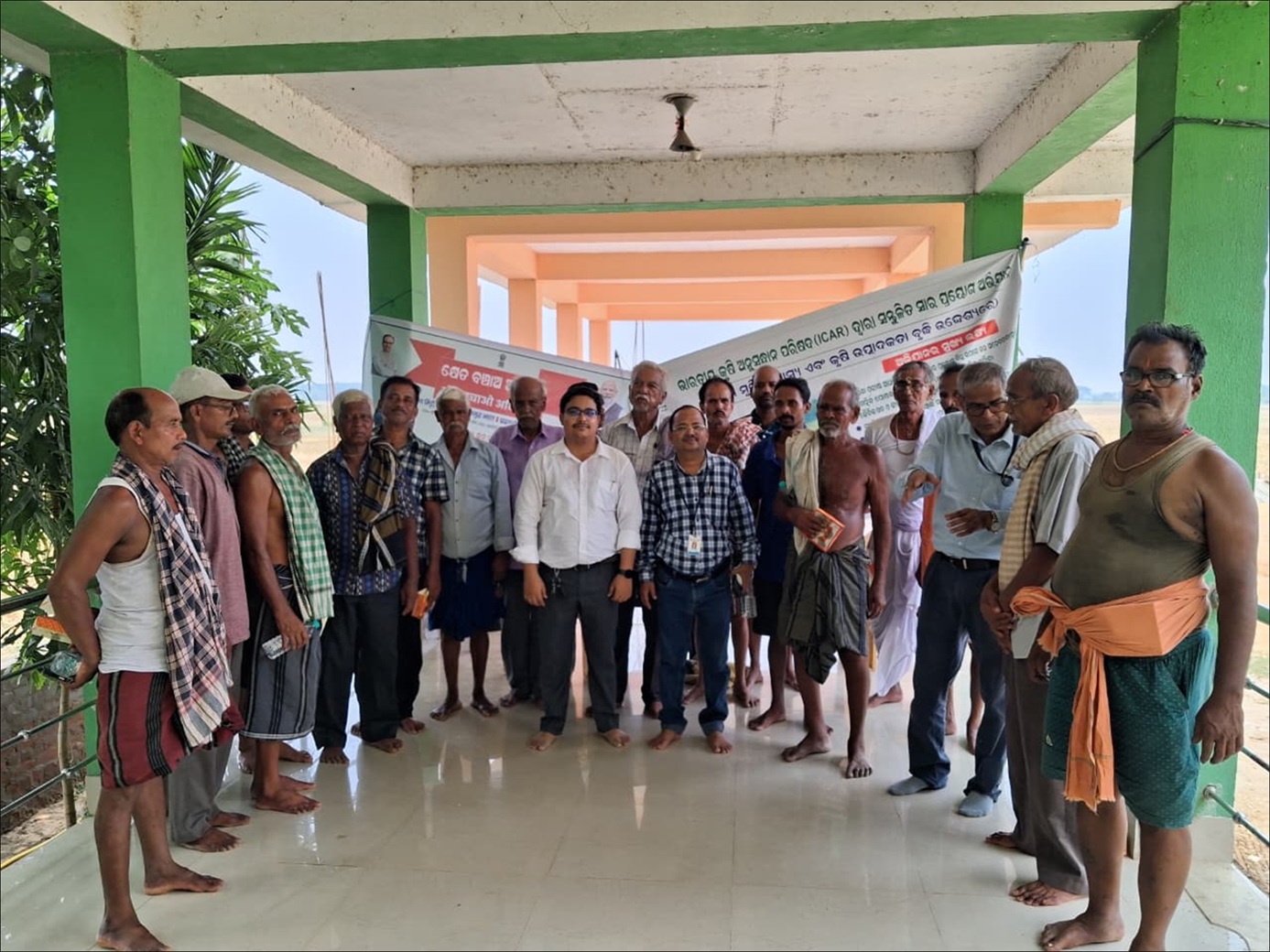
As part of its outreach activities under the “Khet Bachao Abhiyan”, ICAR–Indian Institute of Water Management, Chandrasekharpur, Bhubaneswar organized an awareness-cum-training programme on 11th June 2026 at Nachhipur village, Jagatsinghpur Block, Jagatsinghpur District, Odisha. The programme was attended by 47 farmers, including 3 women and 44 men farmers. The programme was organized to promote sustainable farming practices, efficient utilization of agricultural inputs, and improved natural resource management among the farming community. During the technical session, Dr. A.K. Nayak explained the objectives of the Khet Bachao Abhiyan and emphasized the importance of preserving soil and water resources for long-term agricultural sustainability. He highlighted the role of balanced nutrient management in maintaining soil productivity and discussed the benefits of digital agriculture tools. Farmers were introduced to mobile applications such as Plantix and Bharat Vistaar, which can support decision-making through real-time advisory services on crop management, pest and disease diagnosis, and weather information. Dr. B.S. Satapathy focused on strategies for improving soil health through integrated use of organic and inorganic nutrient sources. He discussed the importance of crop residue recycling, green manuring, biofertilizers, and organic amendments for enhancing soil biological activity and nutrient-use efficiency. Farmers were further advised to follow soil-test-based fertilizer recommendations and make effective use of Soil Health Cards for scientific nutrient management. He also carried out a practical demonstration on seed treatment with biofertilizers using Rhizobium for pulse crops and Azotobacter for paddy cultivation. Dr. Ranabir Chakraborty highlighted the significance of climate-resilient agricultural practices for coping with increasing weather variability. He discussed water-saving technologies and agronomic interventions such as mulching, efficient irrigation scheduling, and broad-bed planting for improving water-use efficiency. He also stressed the importance of secondary and micronutrient management in achieving balanced crop nutrition, improving fertilizer-use efficiency, and sustaining crop yields. An interactive discussion session was held during which farmers shared their field-level experiences and sought solutions to issues related to soil fertility, nutrient deficiencies, pest management, and crop production. The scientists addressed the queries and provided practical recommendations tailored to local farming conditions. The programme concluded with a call for wider adoption of scientific and resource-conserving agricultural practices to enhance farm productivity, profitability, and environmental sustainability.