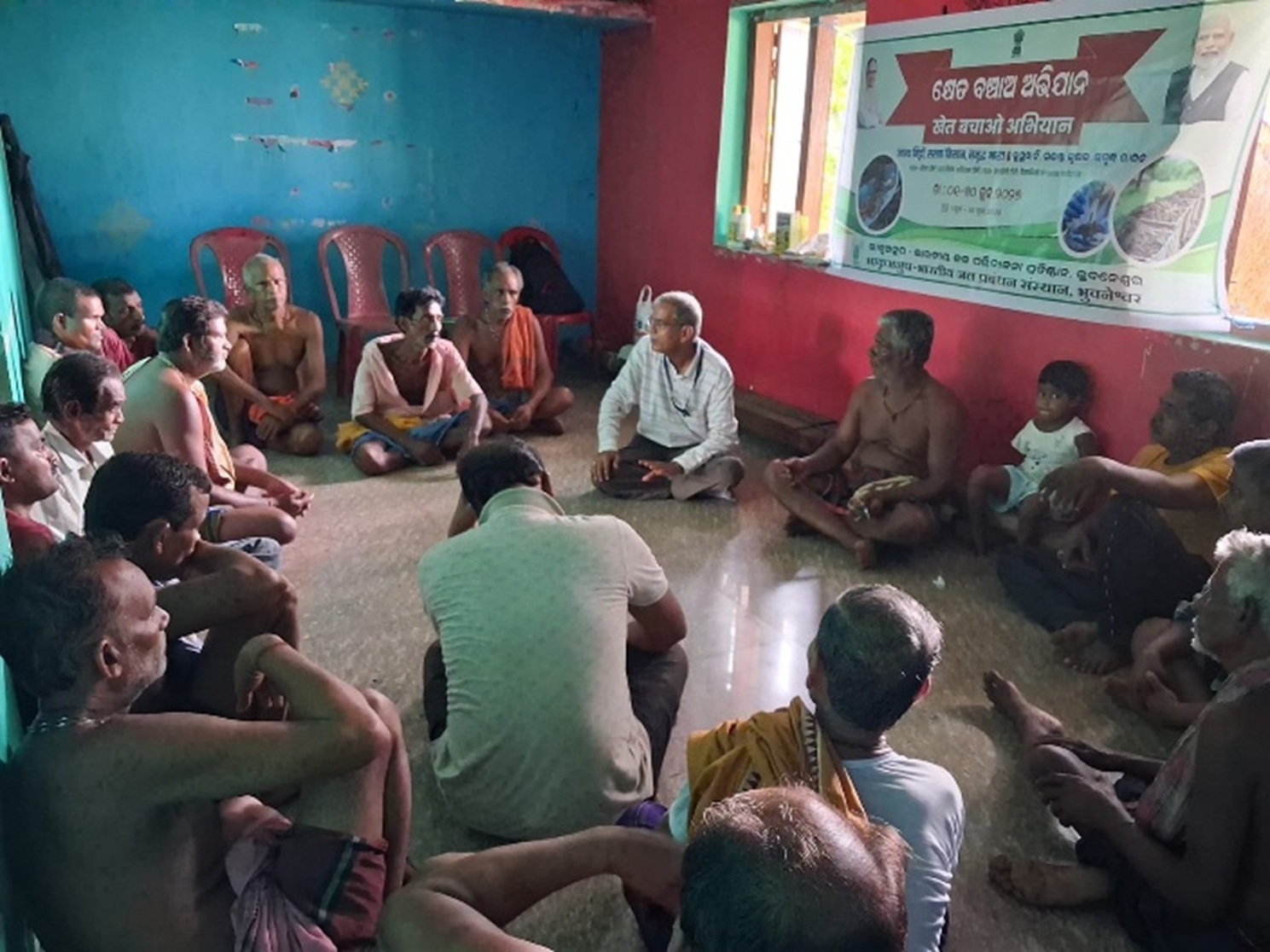
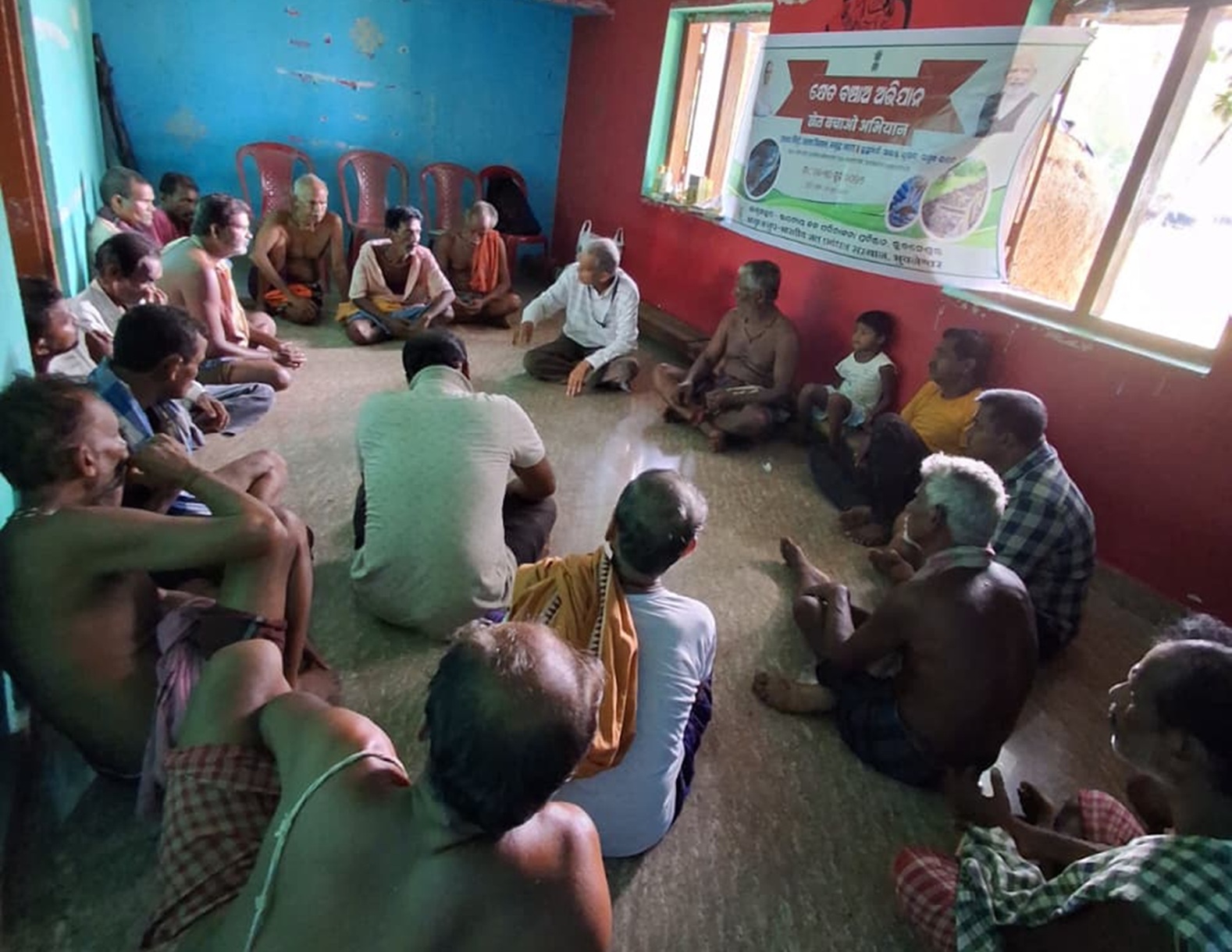
An awareness-cum-demonstration programme under the Government of India’s “Khet Bachao Abhiyan” was organized at Kuanarpur village under Nimapara Block of Puri district, Odisha. The farmer–scientist interaction programme was conducted by scientists from ICAR–Indian Institute of Water Management (IIWM), Bhubaneswar, namely Dr. B.S. Satapathy and Dr. Ranabir Chakraborty, with the active participation of 30 farmers. The programme focused on promoting sustainable soil and nutrient management practices for improving soil health, crop productivity, and farm profitability. Farmers were sensitized on the importance of integrated nutrient management through the combined use of organic manures, crop residues, green manures, biofertilizers, and balanced fertilizer application based on soil testing and Soil Health Cards. The scientists highlighted the role of these practices in enhancing nutrient-use efficiency, maintaining soil fertility, and reducing dependence on costly external inputs.Detailed demonstrations and discussions were conducted on seed treatment techniques using beneficial microbial inoculants such as Azotobacter and Azospirillum, along with biocontrol and biostimulant agents including Trichoderma and Pseudomonas. The benefits of these technologies in improving seedling vigor, nutrient availability, disease suppression, and crop establishment were explained to the farmers.Discussions were held on eco-friendly crop protection approaches, indigenous organic formulations, and the use of locally available plant resources such as neem and karanj for pest and disease management. Farmers were encouraged to adopt natural farming practices and utilize farm-derived resources, including cow dung and preserved cow urine, for preparation of organic inputs and enhancement of soil biological activity. The scientists interacted extensively with the farmers on issues related to declining soil fertility, indiscriminate fertilizer use, increasing cultivation costs, and crop productivity constraints. Practical recommendations were provided on crop diversification, inclusion of pulse crops in cropping systems, compost preparation, residue incorporation, and other resource-conserving agricultural practices. The programme concluded with an appeal to adopt scientific and sustainable farming practices for restoring soil health and ensuring long-term agricultural sustainability.