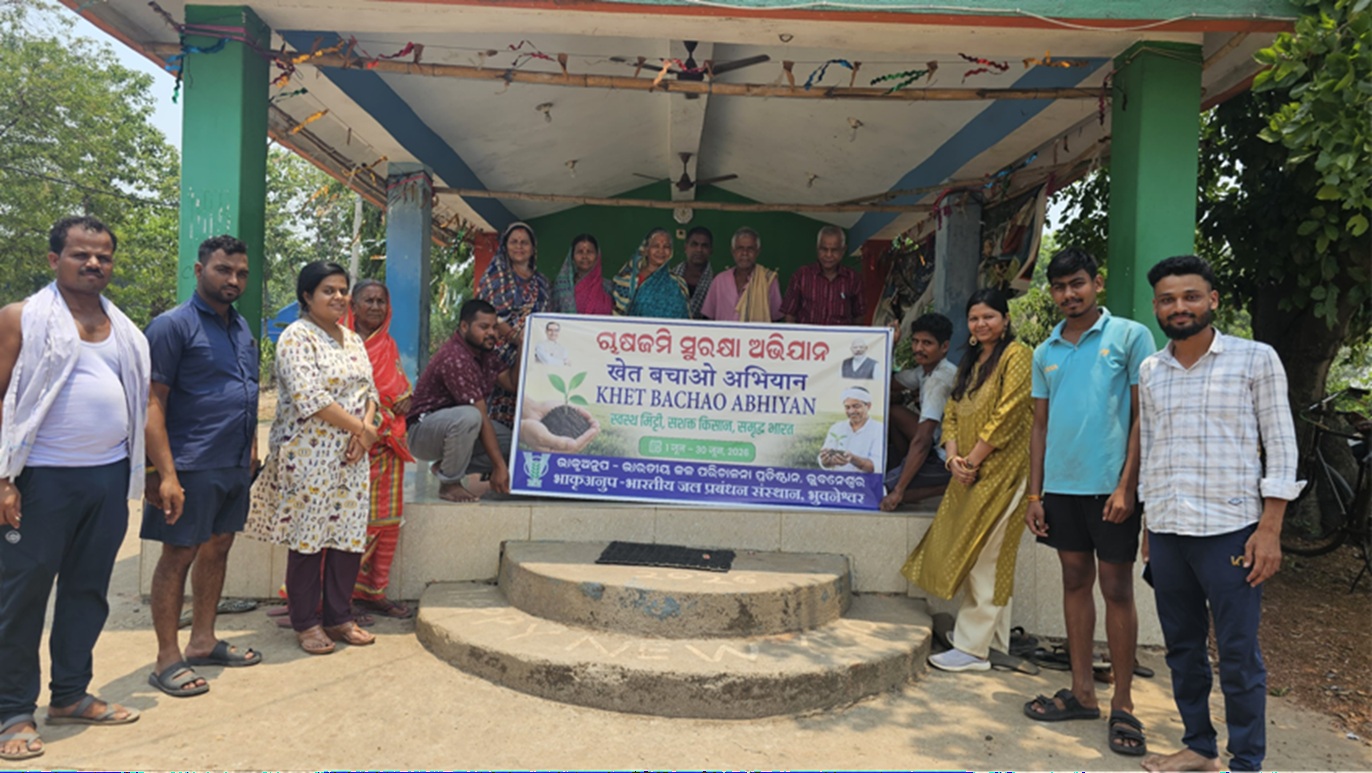
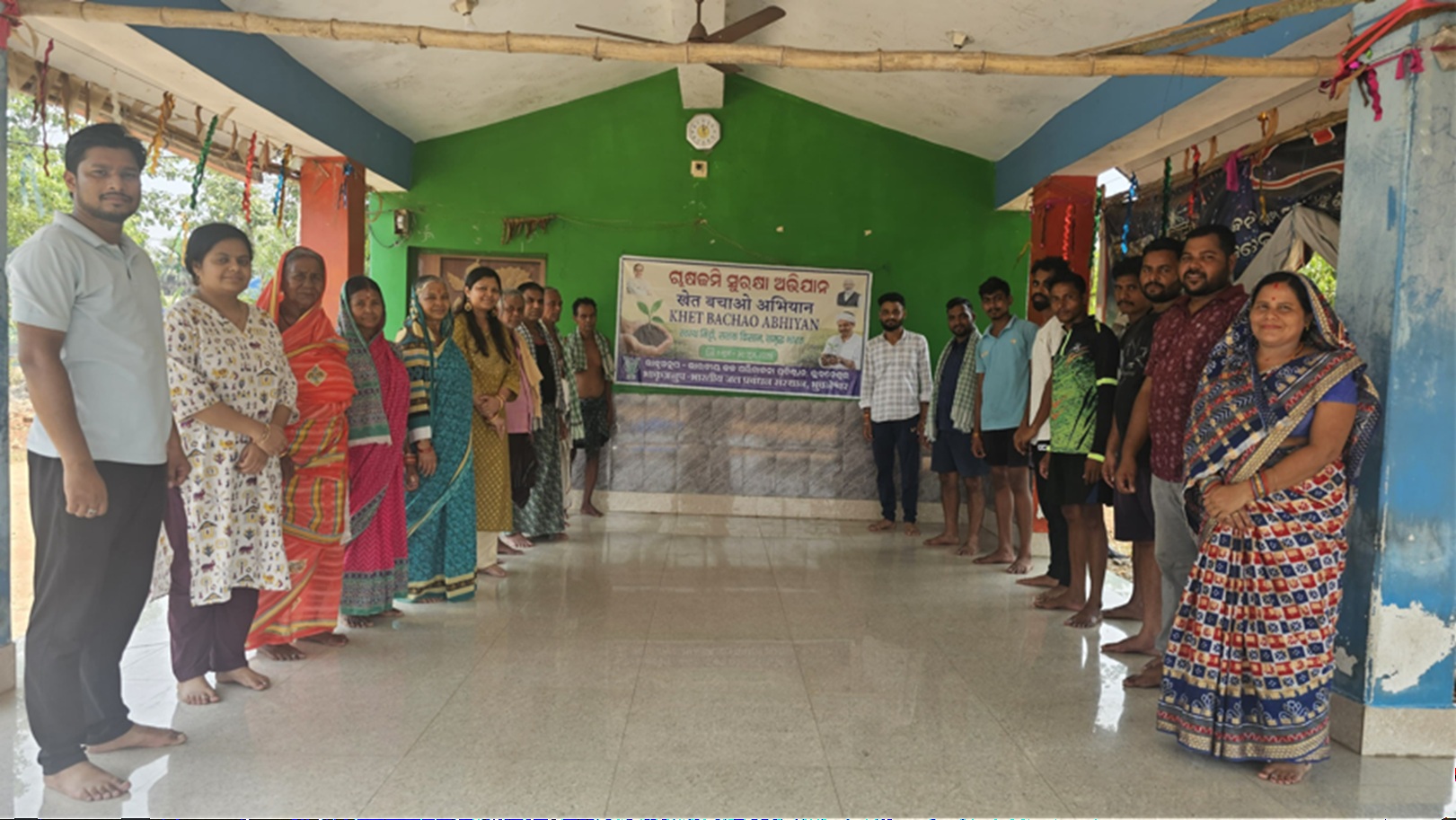
An awareness-cum-demonstration programme was organized at Natada village under Chhendipada Block of Angul district, Odisha, under the Government of India’s Khet Bachao Abhiyan. The farmer-scientist interaction programme was conducted by scientists from ICAR–Indian Institute of Water Management (IIWM), Bhubaneswar, including Dr. Prativa Sahu and Dr. Ankhila R. Handral, with participation of 34 farmers, including 12 women. Farmers were sensitized on the importance of organic manures, crop residues, green manuring, biofertilizers, and soil-test-based fertilizer application using Soil Health Cards. The role of secondary and micronutrients, indigenous organic formulations, and eco-friendly crop protection measures was also highlighted to improve nutrient-use efficiency and sustain soil fertility. Scientists discussed issues such as declining soil fertility, imbalanced fertilizer use, and rising input costs, and emphasized integrated nutrient management, crop diversification, composting, residue incorporation, and inclusion of pulse crops. Demonstrations on the use of biofertilizers such as Rhizobium, Azotobacter, Trichoderma, PSB, KSB, vermicompost, FYM, nano-urea, and green manuring with Sesbania (Dhaincha) were conducted. The programme concluded with an interactive session where farmers discussed field-level challenges and were encouraged to adopt balanced fertilizer use and eco-friendly nutrient management practices for long-term soil health and productivity.